Expanding your business through international manufacturing can create new opportunities, but finding reliable suppliers, negotiating prices, and managing production from another country can be challenging. A professional sourcing agent in China helps international buyers manage these activities by connecting them with suitable manufacturers and coordinating important stages of the procurement process.
China is a major manufacturing destination for businesses sourcing electronics, clothing, furniture, packaging, machinery, beauty products, and thousands of other items. However, working with overseas factories requires careful supplier research, effective communication, and proper quality management.
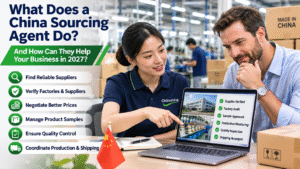
This guide explains what a China sourcing agent does, which services they provide, and how hiring one can help your business manage international procurement more effectively in 2027.
What Is a China Sourcing Agent?
A China sourcing agent is an individual or company that assists international businesses with finding and purchasing products from Chinese manufacturers and suppliers.
The agent acts as a local procurement representative, helping buyers communicate with suppliers, compare quotations, coordinate product samples, and follow manufacturing orders.
Depending on the agreement, sourcing services may cover the entire purchasing process or only specific activities.
For example, a startup launching a private-label skincare brand might need help finding packaging manufacturers, comparing quotations, checking samples, and coordinating production. An experienced sourcing agent can help organize these activities.
Similarly, an established retailer purchasing furniture in large quantities may need assistance identifying manufacturers, negotiating commercial terms, and arranging quality inspections.
8 Main Responsibilities of a China Sourcing Agent
The responsibilities of a sourcing agent depend on the services agreed upon with the buyer. However, professional sourcing arrangements commonly include the following activities.
1. Finding Suitable Manufacturers and Suppliers
One of the primary responsibilities of a sourcing agent is identifying manufacturers that can meet a buyer’s product requirements.
Instead of contacting hundreds of suppliers individually, businesses can work with a sourcing partner to identify and shortlist suitable candidates.
The process may involve:
- Researching manufacturers in relevant Chinese industrial regions.
- Searching supplier databases and B2B marketplaces.
- Identifying factories specializing in specific products.
- Comparing production capabilities.
- Requesting product quotations.
- Shortlisting suppliers based on business requirements.
For example, a company looking for customized furniture may need manufacturers with specific woodworking capabilities, materials, production capacity, and finishing options.
The sourcing agent helps narrow down potential suppliers so the buyer can make a more informed decision.
2. Verifying Chinese Suppliers
Finding a supplier is only the beginning. Businesses also need to understand whether a potential supplier is legitimate and capable of fulfilling their orders.
A sourcing agent may assist with supplier verification by checking:
- Business registration information.
- Company addresses and contact details.
- Manufacturing capabilities.
- Product specialization.
- Relevant certificates and documentation.
- Factory facilities and equipment.
- Previous manufacturing or export experience.
Depending on the project, verification may involve document reviews, video calls, or physical factory visits.
Buyers should remember that verification does not automatically guarantee future product quality or supplier performance. Important claims should be supported by appropriate evidence.
3. Negotiating Prices and Purchasing Terms
Product prices can vary considerably between manufacturers, even when they offer similar products.
A sourcing agent can help buyers request comparable quotations and negotiate purchasing conditions.
Negotiations may cover:
- Unit prices.
- Minimum order quantities (MOQs).
- Production lead times.
- Packaging expenses.
- Customization charges.
- Tooling costs.
- Payment arrangements.
- Shipping terms.
For example, an international retailer ordering 1,000 customized products may receive different quotations from several factories.
The sourcing agent can organize these quotations and help compare the complete purchasing costs rather than focusing only on the advertised unit price.
4. Coordinating Product Samples
Product samples allow buyers to evaluate manufacturing quality before approving a larger production order.
A sourcing agent can coordinate communication between buyers and manufacturers during the sampling process.
This may include:
- Requesting initial samples.
- Confirming product specifications.
- Coordinating design modifications.
- Checking materials and finishing.
- Arranging sample delivery.
- Communicating buyer feedback.
- Obtaining revised samples when necessary.
For customized products, the buyer should approve a final reference sample before mass production.
This approved sample can serve as a benchmark during subsequent quality inspections.
5. Managing Production Follow-Ups
After an order is confirmed, production needs to be monitored to ensure the manufacturer follows the agreed specifications and schedule.
A sourcing agent may coordinate with factory representatives to receive progress updates and identify potential problems.
Typical activities include:
- Confirming production schedules.
- Following up on manufacturing milestones.
- Communicating specification changes.
- Requesting production photographs or videos.
- Reporting delays.
- Coordinating corrective actions.
Regular communication helps international buyers understand the progress of their orders without needing to contact factories directly throughout the day.
However, production monitoring should not be confused with a guarantee that every order will be completed on time.
6. Arranging Product Quality Inspections
Quality management is an important part of international procurement.
A sourcing agent may coordinate inspections to help buyers determine whether products meet agreed specifications.
Common inspection stages include:
Pre-production inspection
Checks materials, components, samples, and production preparations before manufacturing begins.
During-production inspection
Evaluates products while manufacturing is underway, helping identify potential problems before the entire order is completed.
Pre-shipment inspection
Checks finished products before shipment, including appearance, quantity, dimensions, functionality, and packaging where applicable.
Buyers should establish clear inspection requirements and acceptance criteria before production begins.
For high-value or technically complex orders, an independent third-party inspection company may provide an additional level of assurance.
7. Coordinating Warehousing and Shipping
Some international buyers purchase products from several Chinese manufacturers. Managing separate shipments can create additional costs and logistical challenges.
Depending on the sourcing agreement, an agent may help coordinate:
- Receiving goods from different suppliers.
- Temporary warehouse storage.
- Product quantity checks.
- Shipment consolidation.
- Packaging coordination.
- Freight forwarder communication.
- Export documentation preparation.
For example, a retailer purchasing packaging materials, accessories, and finished products from three factories may benefit from consolidating eligible shipments into a single consignment.
The actual shipping arrangements depend on the selected transport method, destination, customs requirements, and agreement with the freight forwarder.
8. Providing Ongoing Procurement Support
Businesses with recurring purchasing requirements may benefit from maintaining a long-term relationship with a sourcing partner.
After completing an initial order, a sourcing agent may help manage repeat purchases, coordinate updated quotations, communicate product changes, and maintain relationships with approved suppliers.
Over time, this can make procurement more organized and reduce the need to repeat the entire supplier discovery process for every order.
How Does a China Sourcing Agent Help Different Businesses?
Sourcing requirements vary depending on the size and nature of a business.
Here are some examples of how different companies can benefit.
Startups and new businesses
New businesses may need help finding their first manufacturers, understanding MOQs, coordinating samples, and developing private-label products.
Ecommerce businesses
Online retailers may need assistance sourcing products, comparing suppliers, managing customized packaging, and coordinating recurring orders.
Wholesalers and distributors
Wholesale businesses often require competitive pricing, consistent product specifications, and manufacturers capable of fulfilling larger quantities.
Established manufacturers
Companies with existing production operations may need additional suppliers for components, materials, packaging, or specialized products.
Retail brands
Retail brands may benefit from sourcing support for customized products, product development, supplier communication, and production coordination.
China Sourcing Agent vs Managing Suppliers Yourself
Businesses generally have two options when purchasing from Chinese manufacturers.
| Factor | With a sourcing agent | Self-managed sourcing |
|---|---|---|
| Supplier research | Agent assists with discovery | Buyer researches independently |
| Communication | Local coordination available | Buyer communicates directly |
| Price negotiation | Agent may negotiate | Buyer negotiates |
| Sample coordination | Agent can manage requests | Buyer handles arrangements |
| Production follow-up | Agent may provide updates | Buyer monitors production |
| Quality inspections | Agent can coordinate inspections | Buyer arranges inspections |
| Service fees | Additional service costs | Internal time and operating costs |
Neither approach is automatically better for every business.
Experienced importers with established Chinese supplier relationships may prefer managing procurement independently. Businesses without local teams may find professional sourcing support useful.
The right choice depends on purchasing volume, product complexity, available resources, and the level of assistance required.
What Services Should You Confirm Before Hiring a Sourcing Agent?
Not every sourcing company offers the same services.
Before entering an agreement, ask for a clear explanation of the responsibilities included in the proposed package.
Consider confirming the following:
- Does the agent find and shortlist manufacturers?
- Are supplier verification services included?
- Can the agent coordinate factory visits?
- Are product samples and shipping arrangements covered?
- Does the agent negotiate prices and MOQs?
- Are production updates provided?
- Can the agent arrange quality inspections?
- Are warehousing and shipment coordination available?
- How are service fees calculated?
- Who is responsible for approving suppliers, products, and payments?
Request a written service agreement covering responsibilities, deliverables, fees, payment arrangements, and limitations.
Also clarify whether the agent receives any commissions or financial benefits from suppliers. Transparent payment arrangements help buyers understand whose interests the agent represents.
How to Get Started With a China Sourcing Agent
Working with a sourcing agent becomes easier when you prepare your requirements before requesting assistance.
Start by identifying the products you want to purchase and collecting relevant specifications.
Prepare information such as:
- Product descriptions and photographs.
- Required materials and dimensions.
- Estimated order quantities.
- Target purchasing budget.
- Customization requirements.
- Packaging specifications.
- Destination country.
- Expected delivery schedule.
Share this information with potential sourcing partners and request an explanation of their proposed process.
Compare their experience, service coverage, communication, and quotations before making a decision.
Starting with a manageable order or clearly defined sourcing project can also help you evaluate the working relationship before expanding it.
Work With ChiSourcing for Your China Product Sourcing Requirements
Finding suitable manufacturers and managing overseas procurement requires time, research, and effective supplier communication.
ChiSourcing helps international businesses explore product sourcing and procurement opportunities in China.
Whether you are a startup searching for your first manufacturer, an ecommerce business exploring private-label products, or an established company looking to expand its supplier network, understanding your sourcing requirements is the first step.
Visit ChiSourcing to explore its China sourcing services and discuss your product requirements with the team.
Frequently Asked Questions
What does a China sourcing agent do?
A China sourcing agent helps international buyers find suppliers, compare quotations, negotiate purchasing terms, coordinate samples, follow production, arrange quality inspections, and coordinate shipping-related activities depending on the agreed service scope.
Do sourcing agents in China work with international businesses?
Yes. Many sourcing companies work with international importers, retailers, wholesalers, ecommerce businesses, and manufacturers. Buyers should confirm the agent’s experience with their destination market and product category.
Can a sourcing agent help find manufacturers on Alibaba?
Yes. A sourcing agent may research manufacturers through Alibaba, other B2B platforms, local supplier networks, trade fairs, and industry contacts. Supplier information should still be independently evaluated.
Do China sourcing agents handle quality control?
Some sourcing agents provide or coordinate quality control services. The buyer should confirm which inspections are included, who performs them, and what inspection reports or evidence will be provided.
Is a sourcing agent the same as a trading company?
No. A sourcing agent generally represents or assists the buyer in finding and managing suppliers. A trading company typically purchases products from manufacturers and resells them to customers. However, business models vary, so buyers should clarify the actual role of each company.
Can a sourcing agent arrange shipping from China?
Many sourcing agents coordinate shipping-related activities, such as shipment consolidation, warehouse coordination, and communication with freight forwarders. Confirm whether freight booking, customs clearance, and destination delivery are included or handled by separate providers.
Final Thoughts
A China sourcing agent can play an important role in helping international businesses manage supplier discovery, purchasing negotiations, product sampling, manufacturing follow-ups, quality inspections, and logistics coordination.
However, the services provided vary between companies. Buyers should establish clear expectations, verify important information, and understand their own responsibilities before entering a sourcing agreement.
With the right procurement strategy and a suitable sourcing partner, businesses can develop stronger supplier relationships and manage international purchasing more efficiently.