Le fabricant d'équipement d'origine, ou OEM, est un concept fondamental dans la fabrication et le commerce au niveau mondial. Comprendre Qu'est-ce que l'usine oem ? est essentiel pour les importateurs et les acheteurs du monde entier. Ces usines produisent des biens ou des composants qui sont ensuite vendus par une autre entreprise sous sa propre marque. Ce modèle permet aux propriétaires de marques de se concentrer sur la conception, le marketing et les ventes, en externalisant le processus de fabrication complexe.
Le modèle OEM est particulièrement répandu dans les secteurs de l'électronique, des pièces automobiles et des biens de consommation. Il permet aux entreprises qui ne disposent pas de leurs propres installations de production d'accéder au marché de manière rentable. Par conséquent, le partenariat OEM constitue l'épine dorsale de nombreuses chaînes d'approvisionnement internationales.

Qu'est-ce qu'une usine OEM ?
Une usine OEM fabrique un produit sur la base de la conception et des spécifications exactes de l'acheteur. L'acheteur, ou le propriétaire de la marque, fournit les plans, la liste des matériaux et les normes de contrôle de la qualité. La responsabilité de l'usine OEM consiste uniquement à produire l'article tel qu'il est spécifié.
Par exemple, un grand détaillant conçoit une cafetière sur mesure. Il envoie le projet à une usine OEM, qui fabrique le produit fini. Le détaillant le vend ensuite sous sa marque. Ce type d'arrangement est courant pour la création d'articles de marque uniques.
OEM vs. ODM : Distinctions clés
Il est important de distinguer le modèle OEM du modèle ODM (Original Design Manufacturer). Dans le modèle OEM, l'acheteur détient la propriété intellectuelle et fournit la conception. L'usine ne s'occupe que de la fabrication.
À l'inverse, dans le modèle ODM, l'usine conçoit elle-même le produit. L'acheteur se contente de sélectionner un modèle existant et d'y apposer sa marque. Il est essentiel de comprendre cette différence pour gérer les droits de propriété intellectuelle et les stratégies de développement de produits.
Le rôle et les responsabilités d'une usine OEM
L'usine OEM exécute un ensemble de tâches hautement spécialisées, en adhérant strictement au cadre de l'acheteur. Leurs rôles définis sont entièrement axés sur la précision de la production et l'exécution de la qualité.
Fabrication et contrôle de la qualité
La principale responsabilité de l'usine OEM est la fabrication de précision du produit. Elle gère l'ensemble de la chaîne de production, y compris l'approvisionnement en matières premières et l'assemblage du produit final. Le contrôle de la qualité est effectué sur la base des spécifications de l'acheteur.
En outre, ils gèrent l'outillage nécessaire, l'entretien des machines et la programmation de la production. Ils doivent s'assurer que chaque unité quittant la chaîne de montage respecte les tolérances exactes définies par l'entreprise importatrice.
Propriété intellectuelle et exclusivité
Dans une relation OEM stricte, l'usine doit protéger la propriété intellectuelle de l'acheteur. Elle ne peut légalement vendre la conception du produit ou les produits finis à aucune autre entreprise. Cette confidentialité est garantie par des accords de non-divulgation (NDA).
Toutefois, les acheteurs doivent être vigilants, en particulier lorsqu'ils traitent avec des usines pour la première fois. Des contrats clairs et applicables sont essentiels pour protéger la conception unique du produit et l'avantage concurrentiel.
Avantages stratégiques de l'utilisation d'une usine OEM
Le partenariat avec une usine OEM offre des avantages considérables qui permettent aux propriétaires de marques d'évoluer rapidement et de rester concentrés sur le marché. Ces avantages sont cruciaux dans l'économie mondiale actuelle qui évolue rapidement.
Se concentrer sur les compétences de base
Le modèle OEM permet à l'entreprise importatrice de concentrer ses ressources sur la conception, le marketing et les ventes. Il élimine la nécessité d'investir massivement dans l'équipement et les installations de fabrication. Cette spécialisation est un gage d'efficacité.
En outre, la marque peut maintenir une structure opérationnelle légère. Elle tire parti de l'échelle existante et de la capacité de production spécialisée de l'usine de l'équipementier de manière instantanée. Cette orientation stratégique accélère l'entrée sur le marché.
Réduction des coûts et évolutivité
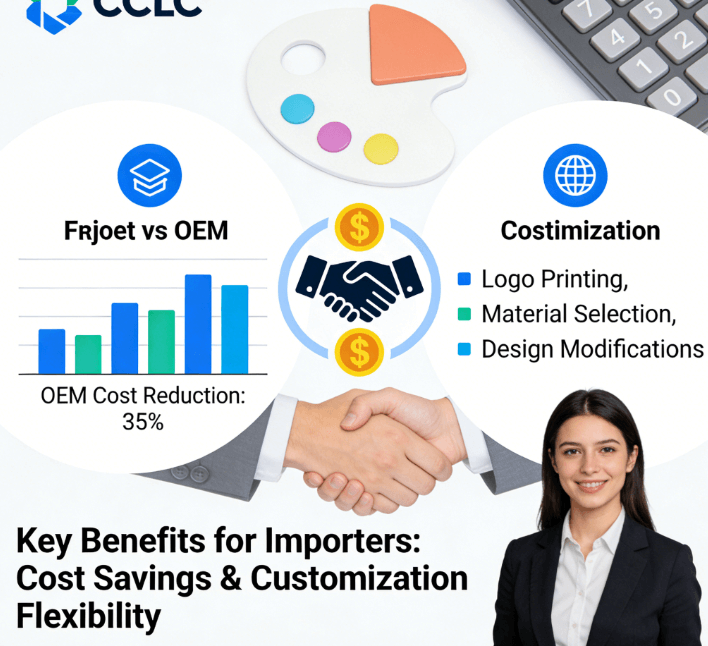
Les usines des équipementiers opèrent souvent à grande échelle, ce qui permet de réduire les coûts de fabrication par unité. Elles bénéficient d'économies d'échelle dans l'approvisionnement en matières premières et dans l'efficacité de la production. Ces économies sont répercutées sur l'acheteur.
En outre, il est plus facile et plus rapide de faire évoluer la production. Lorsque la demande augmente, l'usine OEM peut rapidement ajuster sa capacité sans que l'acheteur ait besoin de construire de nouvelles installations. Cette évolutivité est essentielle pour une expansion rapide de l'entreprise.
Accès à une expertise spécialisée
De nombreuses usines OEM, en particulier dans des régions comme l'Asie, possèdent des compétences techniques et des machines hautement spécialisées. Elles ont des années d'expérience dans la production de composants ou de produits finis spécifiques et complexes. En établissant un partenariat avec elles, l'acheteur bénéficie d'un accès immédiat à cette expertise.
Par exemple, une usine spécialisée dans le moulage par injection de plastique offre des connaissances que l'acheteur mettrait des années à développer en interne. Ce savoir-faire spécialisé en matière de fabrication garantit une meilleure qualité des produits.
Recourir à un agent d'achat pour l'approvisionnement des fabricants d'équipement d'origine (OEM)
Travailler directement avec une usine OEM à l'étranger peut s'avérer difficile en raison des barrières linguistiques, des différences culturelles et de la distance géographique. Un agent d'approvisionnement constitue un lien indispensable dans ce processus.
Contrôle et audit
Un agent d'approvisionnement apporte un soutien essentiel sur le terrain. Il procède à une vérification initiale pour s'assurer de la légitimité, de la santé financière et de la capacité de l'usine. Cet aspect est particulièrement important lors de la recherche d'un agent d'approvisionnement fiable en Chine.
En outre, ils effectuent des audits physiques des usines pour confirmer les capacités de production et les systèmes de contrôle de la qualité avant le début de la production. Cette surveillance réduit considérablement le risque de fraude ou de défaut de fabrication.
Gestion du contrôle de la qualité et de la logistique
L'agent gère tous les contrôles de qualité critiques en cours de fabrication et avant expédition. Il s'assure que l'usine OEM respecte toutes les normes de qualité définies par l'acheteur. Cette surveillance constante est essentielle pour la fabrication à distance.
En outre, l'agent coordonne l'expédition, le dédouanement et l'acheminement du fret. Il gère l'ensemble de la chaîne d'approvisionnement, depuis l'usine de l'équipementier jusqu'à l'entrepôt de l'acheteur, ce qui simplifie la gestion de la logistique.
Erreurs courantes à éviter lors de l'utilisation d'une usine OEM
Les importateurs sont souvent confrontés à des pièges lorsqu'ils font appel à des usines OEM. Reconnaître ces erreurs courantes est la première étape pour les atténuer et garantir une fabrication réussie.
Spécifications vagues et protection IP
Ne pas fournir des spécifications de produits très détaillées est une erreur courante qui conduit à des erreurs de production. Les acheteurs doivent fournir des dessins techniques précis, des compositions de matériaux et des normes d'emballage. L'ambiguïté conduit à la discrétion du fabricant.
En outre, le fait de négliger les accords de non-divulgation (NDA) et les contrats de fabrication rend l'acheteur vulnérable. Une documentation juridique solide est essentielle pour protéger les conceptions de produits exclusifs.
S'appuyer uniquement sur des prix bas
Le choix d'une usine OEM sur la seule base du devis le plus bas entraîne souvent des compromis sur la qualité ou le respect de l'éthique. Des prix très bas peuvent être le signe d'une réduction des coûts des matériaux ou de pratiques de travail dangereuses.
Les acheteurs doivent plutôt évaluer le coût total de possession, y compris les dépenses potentielles liées aux défauts, aux retours et aux retards. C'est la valeur, plutôt que le prix, qui doit guider la décision finale.
Contrôle de qualité insuffisant
Il est risqué de supposer que l'usine de l'équipementier maintiendra la qualité sans vérification externe. Les acheteurs à distance doivent mettre en place un système de contrôle continu de la qualité. Se fier uniquement aux contrôles internes de l'usine est souvent insuffisant.
Faire appel à un service d'inspection indépendant ou confier à un agent d'approvisionnement le soin de procéder à des audits réguliers et inopinés permet de garantir la responsabilité. Une surveillance constante permet de maintenir le niveau de qualité souhaité pour le produit.
Étude de cas : Approvisionnement OEM réussi par l'intermédiaire d'un agent d'approvisionnement
Une startup basée aux États-Unis avait besoin d'un appareil domestique intelligent spécialisé fabriqué en volume. Elle a identifié une usine OEM potentielle en Asie, mais ne disposait pas de l'expertise interne nécessaire pour gérer les aspects techniques et le contrôle de la qualité à distance. Elle a donc fait appel à un agent d'approvisionnement en Chine.
L'agent a d'abord procédé à un audit technique détaillé des capacités de l'usine en matière d'outillage. Au cours du premier cycle de production, l'agent a détecté un défaut critique dans un boîtier en plastique qui aurait entraîné la défaillance de l'appareil au bout de six mois. L'agent a interrompu la production, coordonné le réoutillage et obtenu un nouveau délai de livraison. Cette intervention a permis à la startup d'éviter un rappel de produit catastrophique et de garantir le succès à long terme du produit.

Valeur stratégique du partenariat avec les équipementiers
La décision de s'associer à une usine OEM est une décision stratégique qui influe sur l'agilité du marché et la rentabilité à long terme. Lorsqu'elle est gérée correctement, la relation avec les équipementiers devient un puissant moteur de croissance pour l'entreprise.
Ce partenariat permet à l'entreprise importatrice de diversifier rapidement son offre de produits sans augmenter ses ressources de production internes. Il minimise les dépenses en capital et concentre les investissements sur des activités à valeur ajoutée telles que la création d'une marque. Comprendre Qu'est-ce que l'usine oem ? et la manière de la gérer est un facteur clé de la réussite des entreprises modernes.
Tendances futures en matière d'approvisionnement OEM
La relation entre les acheteurs et les usines des équipementiers évolue rapidement, sous l'effet de la technologie et de la demande d'une plus grande transparence. Les tendances futures vont dans le sens d'une collaboration et d'une automatisation accrues.
Transparence numérique et audit en temps réel
À l'avenir, le sourcing impliquera des plateformes numériques qui fourniront aux acheteurs une visibilité en temps réel sur l'atelier de fabrication des équipementiers. Les capteurs de l'internet des objets (IoT) et les outils de surveillance numérique permettront d'effectuer des audits continus de la qualité et de la conformité à distance.
Cette transparence accrue renforcera la confiance entre l'acheteur et l'usine OEM. Le processus de vérification de la qualité sera plus rapide et plus précis que les inspections périodiques traditionnelles.
Intégration de l'IA dans la gestion des équipementiers
Des agents d'intelligence artificielle automatiseront la gestion des relations avec les équipementiers. L'IA surveillera en permanence les données de production de l'usine, les prix des matières premières et les réseaux logistiques. Cette automatisation permettra de prévoir les retards potentiels ou les problèmes de qualité avant qu'ils ne surviennent.
En outre, l'IA peut gérer la complexité de la collaboration avec plusieurs usines OEM simultanément. Elle optimisera l'attribution des commandes et les niveaux de stocks dans la chaîne d'approvisionnement mondiale, garantissant ainsi une efficacité maximale.
Conclusion : Maîtriser le modèle OEM
Comprendre Qu'est-ce que l'usine oem ? et la manière de gérer le partenariat sont des éléments fondamentaux pour la réussite du commerce international. Le modèle OEM constitue un moyen efficace d'accéder au marché, car il permet de réaliser des économies et d'assurer l'évolutivité des produits. En réduisant les risques grâce à un contrôle rigoureux et en tirant parti de l'expertise locale d'un agent d'approvisionnement, les importateurs peuvent garantir la qualité des produits, protéger leur propriété intellectuelle et s'assurer une chaîne d'approvisionnement fiable. La maîtrise de ce modèle est un facteur décisif pour atteindre les objectifs commerciaux mondiaux.