Choosing the right supplier is crucial for a successful product business, ensuring reliability, fewer issues, and allowing you to focus on sales. This guide summarizes eight key aspects to evaluate a potential Chinese supplier.

1. Understand the Supplier’s Business Model
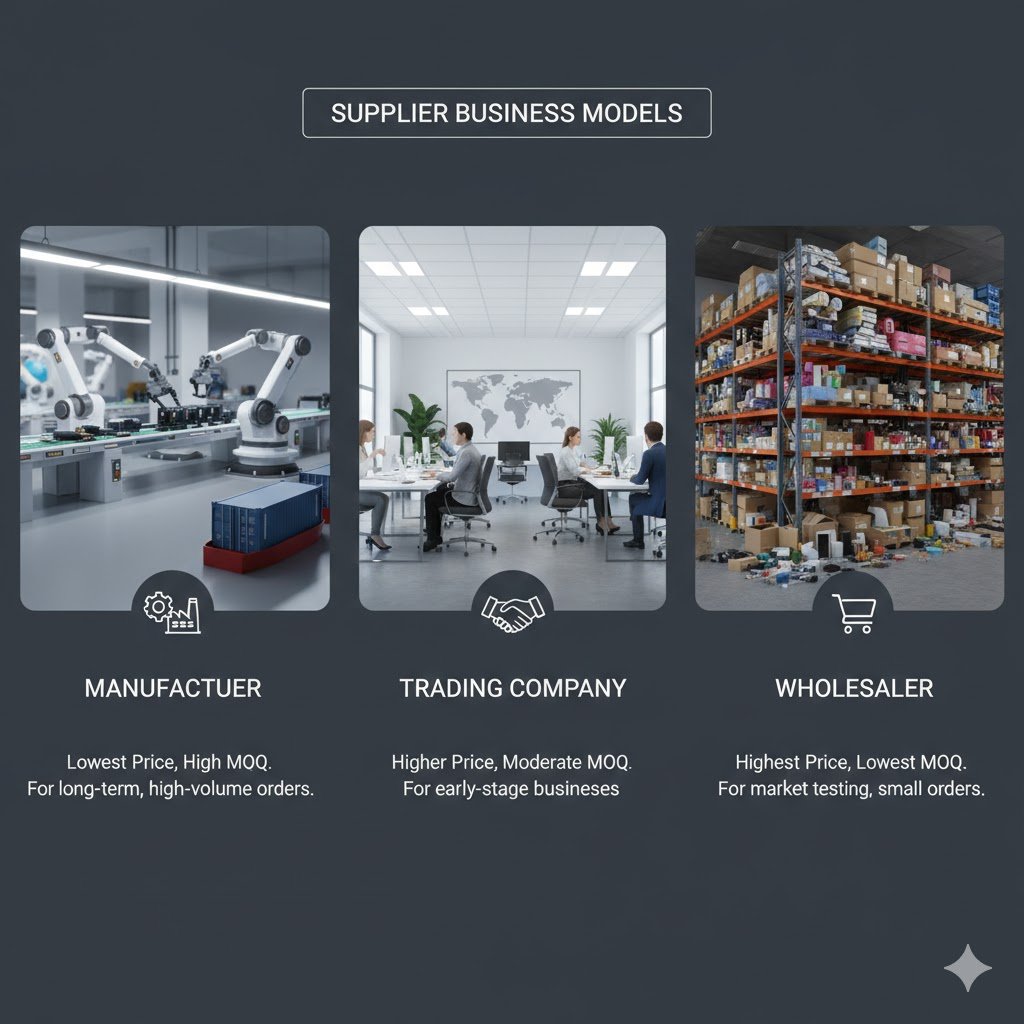
Chinese suppliers generally fall into three types, each with different price points and Minimum Order Quantities (MOQs):
| Supplier Type | Beschreibung | Typical MOQ/Price | Am besten für... |
| Manufacturer | Makes products from scratch. Some sell directly, others only domestically. | Lowest price, higher MOQ ($2k–$5k). | Long-term, high-volume orders. |
| Trading Company | Sells products in a specific category, sourced from long-term manufacturer partners. | Higher price than Manufacturer, MOQs around $1k. | Early stage businesses or long-term partnerships with moderate MOQs. |
| Wholesaler | Resells products from manufacturers and trading companies. | Highest price, lowest MOQ ($100–$200 or less). | Market testing, short-term fads, or small initial orders (not recommended for long-term custom products). |
2. Analyze Supplier’s Product Lines
A supplier’s product range reveals its role:
- Manufacturer: Typically focuses on products made from the same materials or via similar manufacturing processes (e.g., a stainless steel cup manufacturer will focus on metal goods, not glass).
- Trading Company: Product lines should be related (e.g., all types of drinkware).
- Wholesaler: May offer a wide range of unrelated categories, reflecting their role as a reseller.
3. Search Supplier’s Location in China
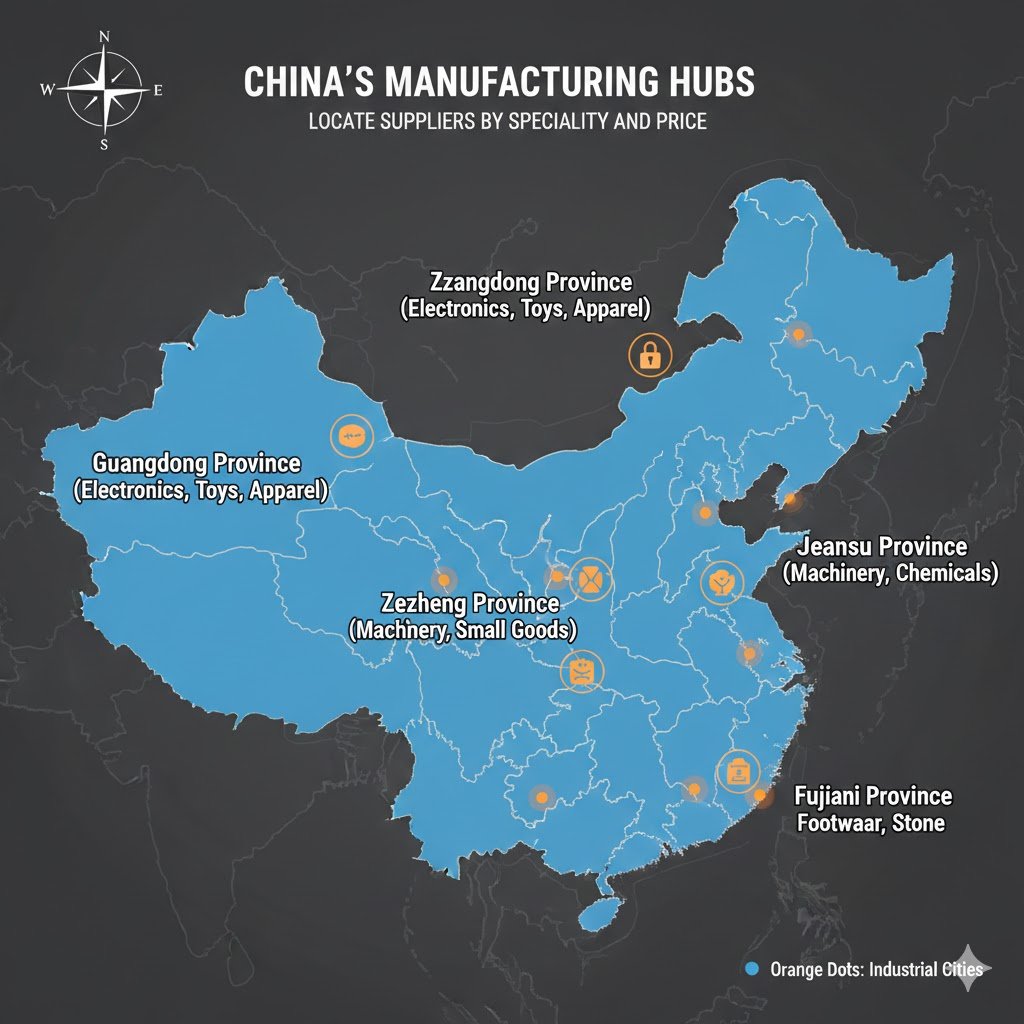
Suppliers located in industrial clusters specializing in your product often offer the most competitive prices.
- Quality Varies: Different clusters, even for the same product, can produce distinct levels of quality (e.g., for silicon products, Guangdong may offer better quality than Zhejiang).
- Practical Tip: Ask suppliers why competitors from other regions are cheaper—they will often highlight their own quality advantages.
- Hong Kong Registration: It’s normal for Chinese trading companies to register an offshore company in Hong Kong to manage foreign currency payments due to China’s strict regulations.
4. Evaluate Supplier’s Business History
For long-term relationships, aim for suppliers who have been in business for at least three years. This indicates stability and commitment, as it’s easy and cheap to start a business in China, but hard to maintain one.
- Verification: Check the business license, Alibaba profile, or use tools like Whois to check the registration date of their website/email domain. Look for proof of consistent attendance at trade shows on their social media/website.
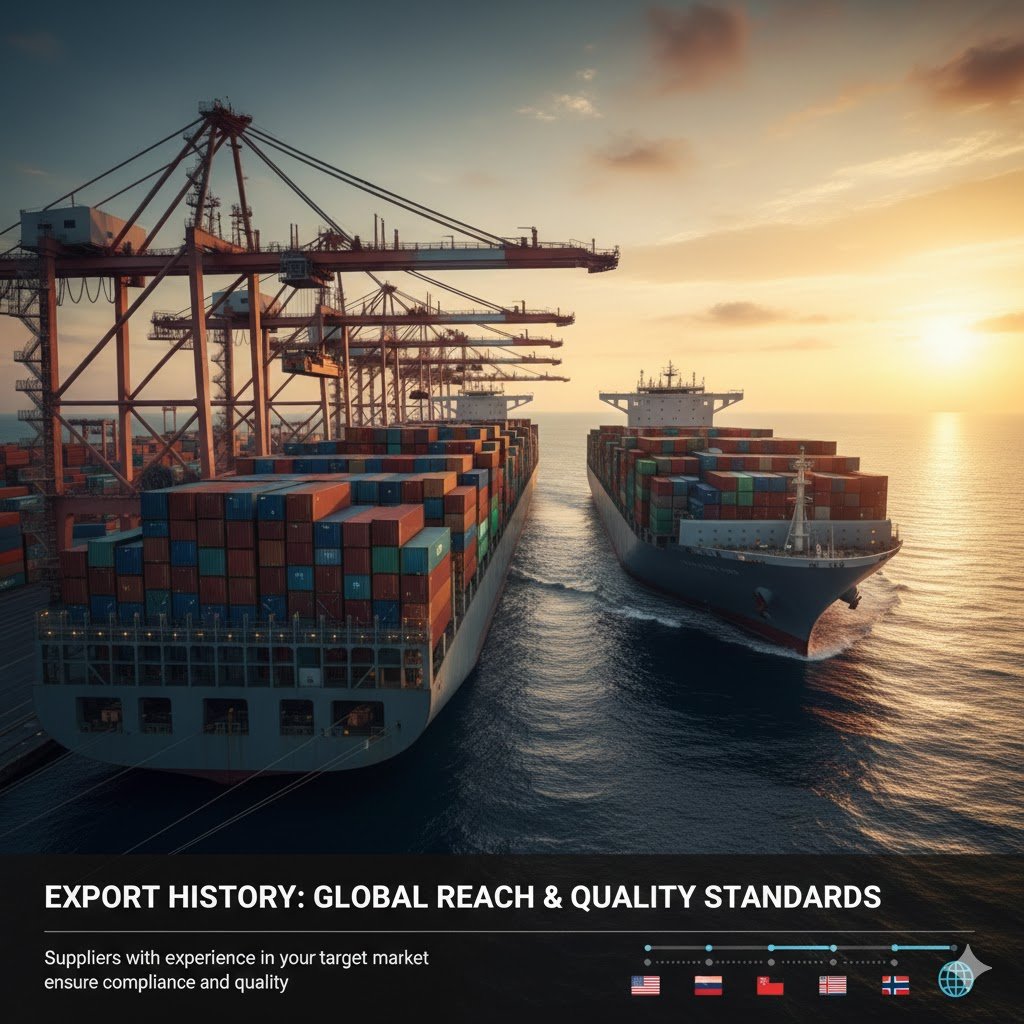
5. Refer to Countries They’ve Exported
A supplier’s export history is a strong indicator of their quality and experience for your specific market:
- Market Alignment: If you sell on a high-standard platform like Amazon U.S., choose a supplier that has successfully exported to the U.S. or developed countries, as customers in developing countries often have different quality expectations.
- Certification & Logistics: Suppliers who have exported to your country before can provide required compliance certifications or refer experienced Spediteure for shipping and customs clearance (especially useful for developing countries with complex procedures).
6. Verify Supplier’s Compliance Certifications
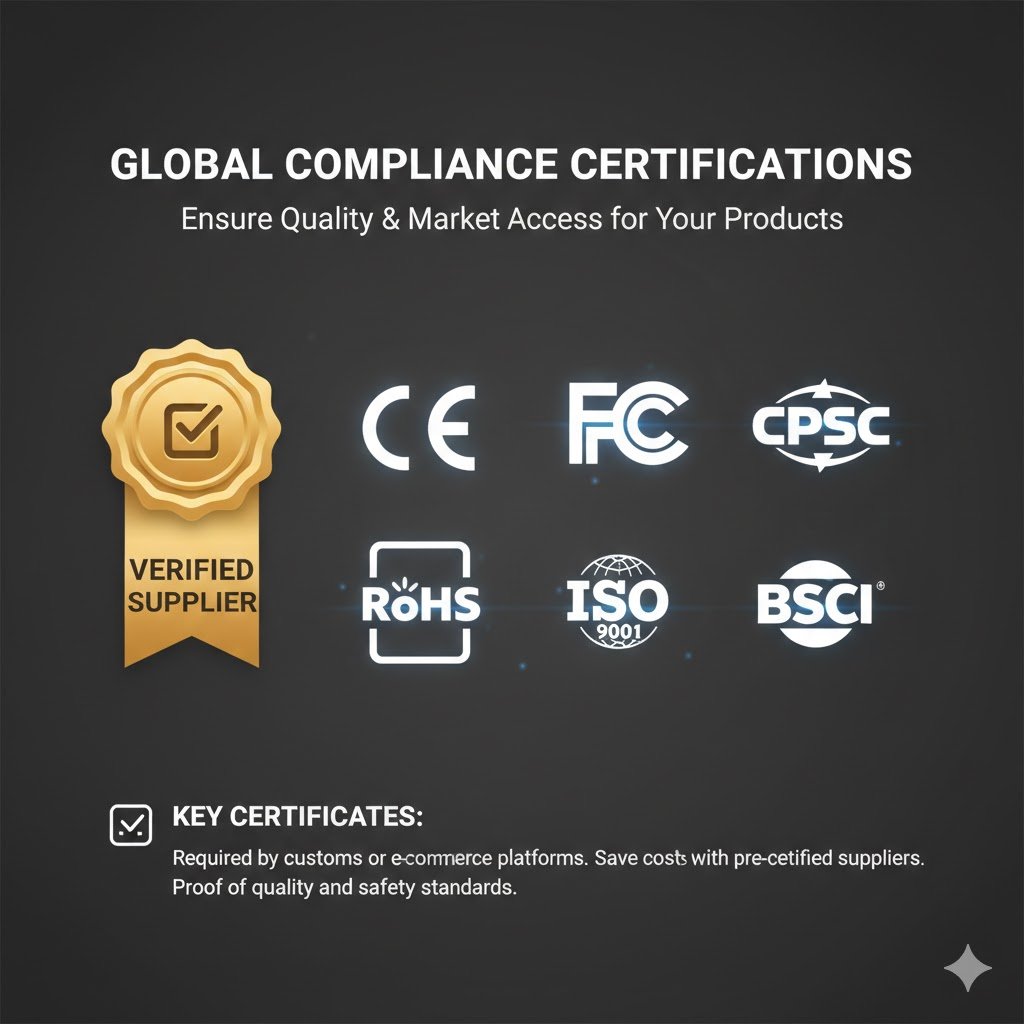
Certifications (e.g., for electronics, toys) are often required by customs or e-commerce platforms.
- Cost Savings: Prioritize suppliers who already possess the mandatory certifications for your target market (e.g., CPSC for the U.S. or CE for the EU).
- Quality Proof: A supplier with a certification for one region (e.g., CE) is likely to pass testing for another (e.g., CPSC), even if you still have to pay for the new testing yourself.
7. Verify the Factory’s Qualifications
For most small to medium-sized businesses, this is not a mandatory requirement, but a bonus. Qualifications show better organization and experience with large retailers.
- ISO 9001: Quality management system, proving organization and authenticity.
- BSCI: Demonstrates social responsibility (fair payments, safe working conditions).
8. Don’t Insist on Export Licenses
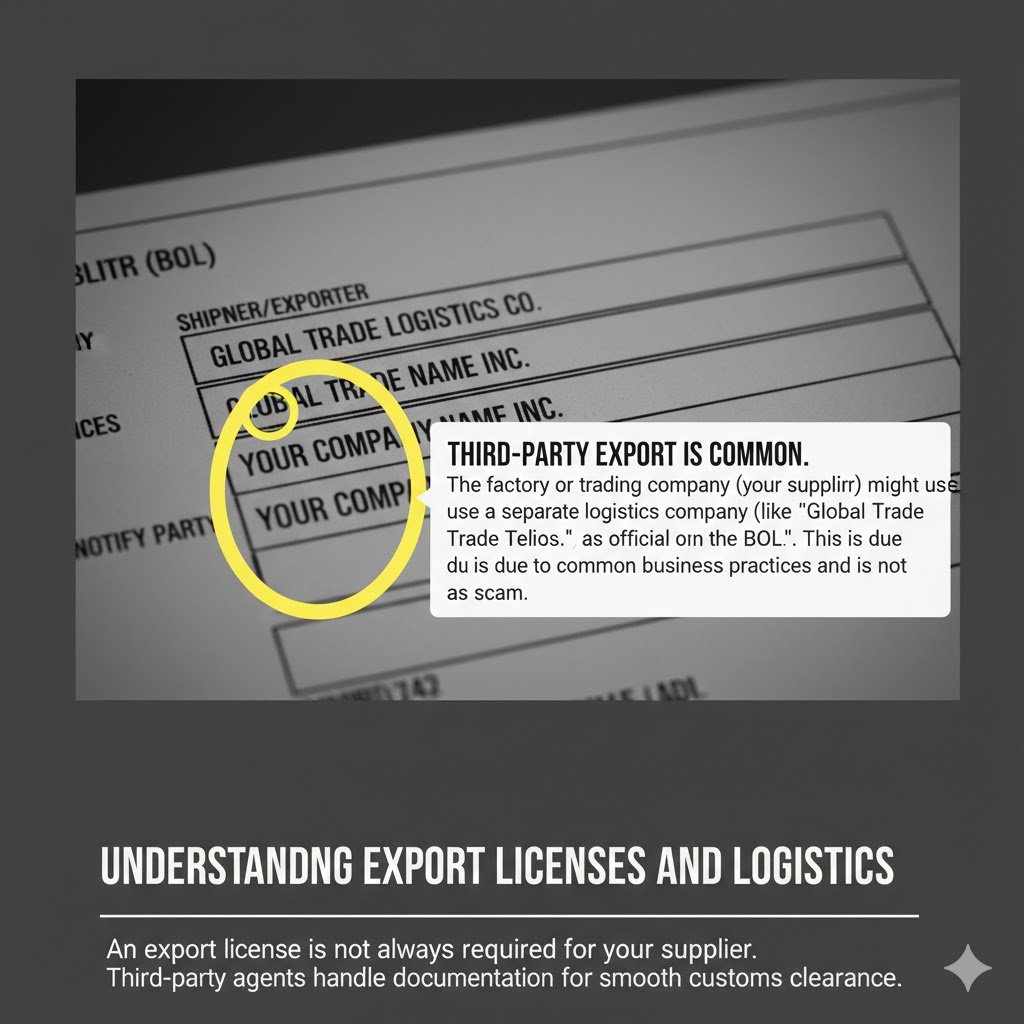
An export license is not necessary. Many smaller manufacturers and trading companies do not have one.
- Third-Party Export: If a supplier lacks a license, they will simply use a third-party company’s title to export. This is normal and common, often due to upstream suppliers not providing VAT invoices.
- Don’t Panic: If the shipper on the Bill of Lading (BOL) is not your supplier’s company name, it is a standard practice and not a scam.