If you’re planning to import products from China, securing accurate and clear quotes is essential. This often involves navigating international trade terms (Incoterms) like FOB, CIF, EXW, and DDP, and being aware of potential pricing pitfalls. Choosing the right trade term is crucial because it defines where the supplier’s responsibility ends and yours begins, impacting the final cost and logistics complexity.
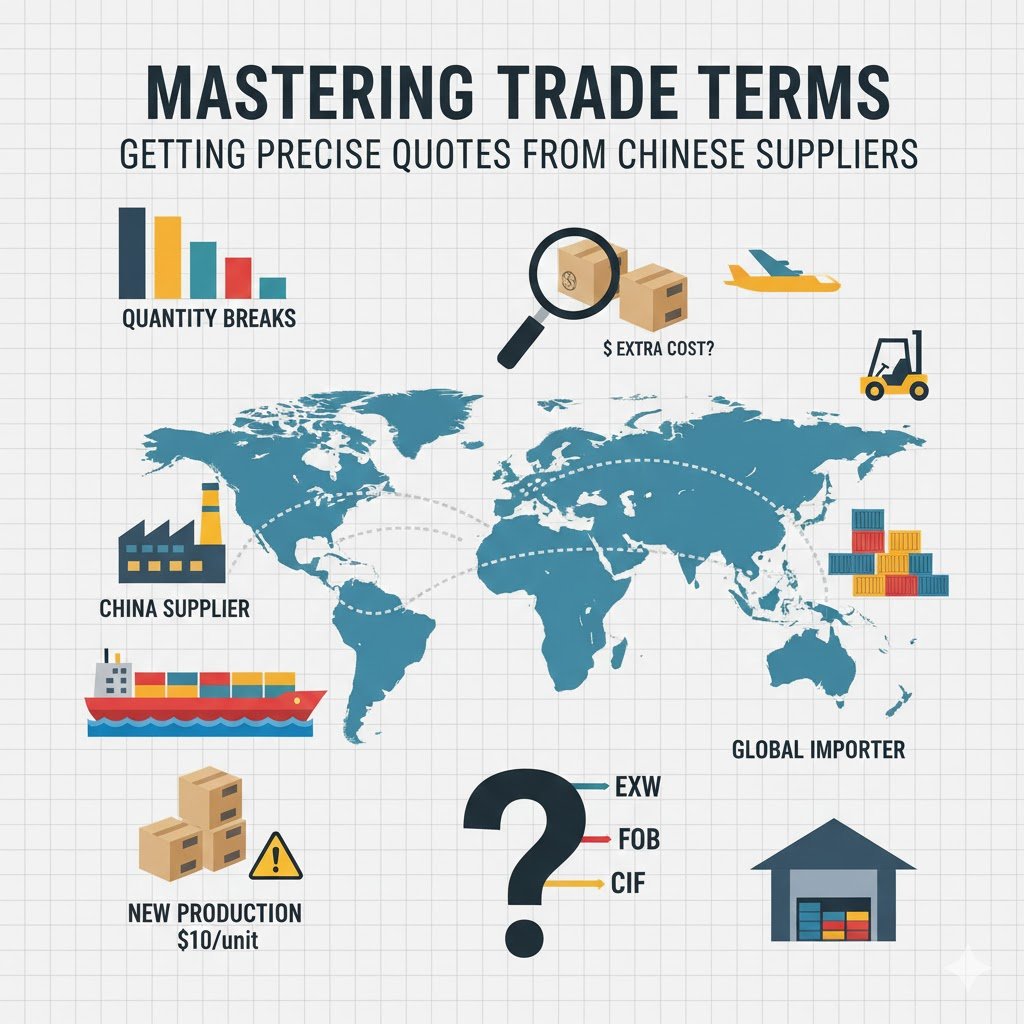
Here is a breakdown of the key trade terms, how to decide which is best for you, and three common traps to avoid when requesting quotes.
1. Which Trade Term (Incoterm) Works Best for You?
The right Incoterm depends entirely on your experience, shipping volume, and whether you prefer to handle logistics yourself or have the supplier manage it. The most commonly used terms are FOB, EXW, CIF, and DDP/DDU.
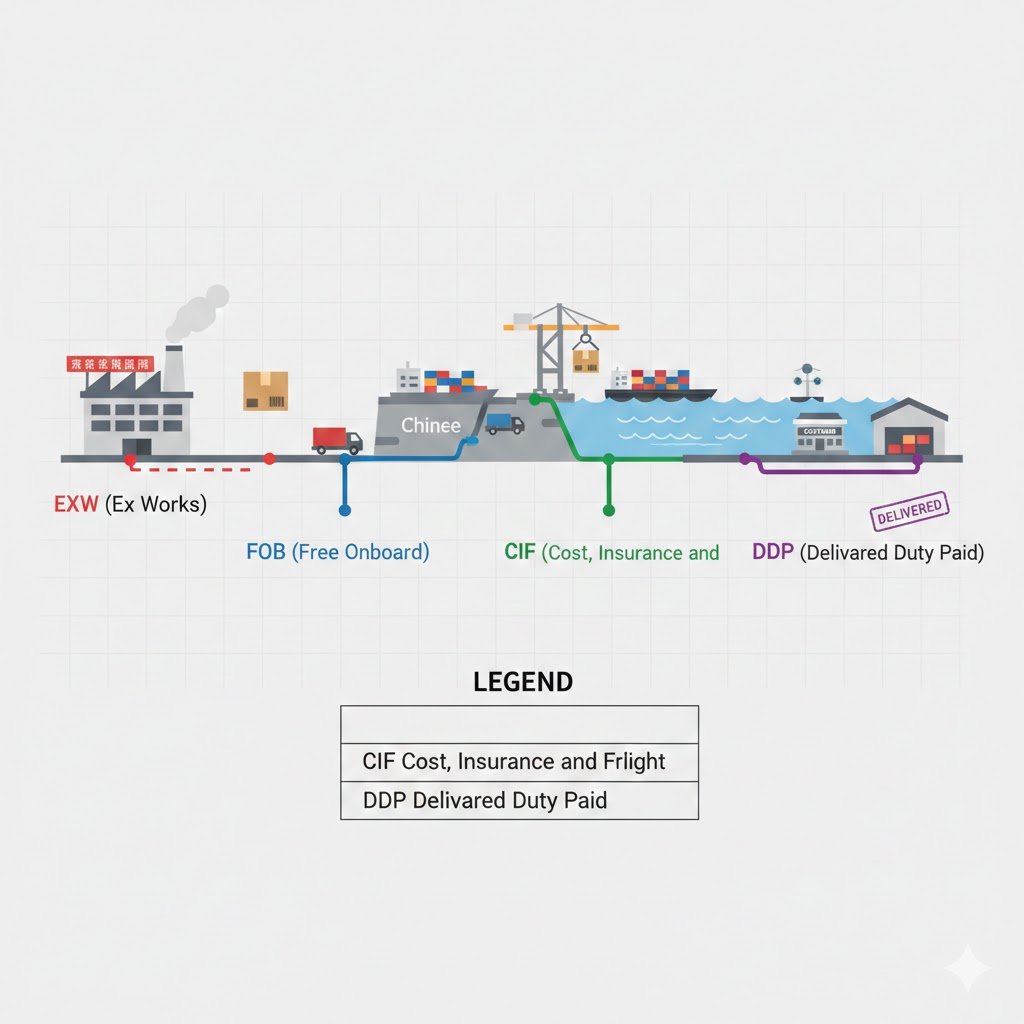
| Trade Term | Stands For | Supplier Responsibility Covers… | Best For… |
| EXW | Ex Works | Manufacturing the product, making it available at their factory/warehouse in China. | Product Research (gives the base price). Small businesses/e-commerce using courier services (FedEx, etc.) that pick up directly from the supplier. |
| FOB | Free Onboard | Getting the product to a specific port/airport in China and loaded onto the vessel/aircraft (including all Chinese export procedures). | Importers who have a trusted freight forwarder in China. Large volume buyers who want control over the main international shipping leg. |
| CIF | Cost, Insurance, and Freight | Getting the product to a specific port/airport in your country (includes the main freight and minimal insurance). | Importers without a freight forwarder but who are prepared to handle import clearance and domestic delivery from the port themselves. |
| DDP | Delivered Duty Paid | All costs, including manufacturing, shipping, insurance, import/export duties, all the way to your specified destination (e.g., your warehouse). | Importers who want a true landed cost estimate or who have no experience/resources to handle shipping and customs. |
| DDU | Delivered Duty Unpaid | Same as DDP, but you pay the final import customs duty upon delivery (often still widely used in practice, though canceled in Incoterms 2010). | Importers who want a door-to-door service but prefer to pay customs duties directly. |
Key Takeaways on Trade Terms:
- For the true product price: Always ask for the EXW price.
- For door-to-door convenience: Ask for the DDP price. This is the simplest option for product cost estimation and new importers.
- For using a courier (FedEx/DHL): Use EXW as the courier company will manage the pickup directly.
- For better shipping control (large volumes): Use FOB, but ensure you have a reliable freight forwarder ready.
2. Tips for Requesting a Precise Quote
Getting a price isn’t enough; you need to understand exactly what that price covers. Ensure you clarify these three crucial points:
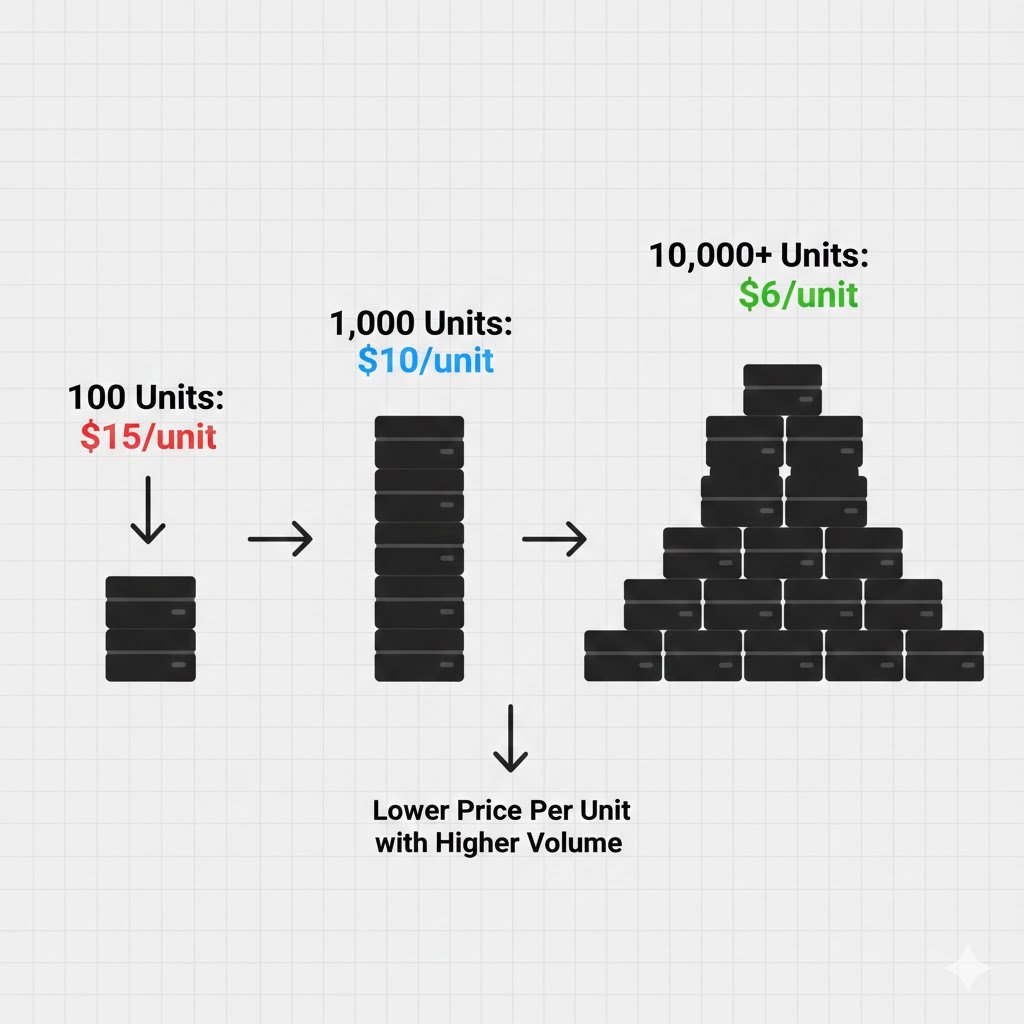
1. Factor in Price Breaks Based on Quantity
Manufacturers offer tiered pricing. To get the best deal and understand their discount structure, don’t just ask for a single price.
- Actionable Tip: Request a price list with quantity breakdowns (e.g., Price for 1,000 units, 5,000 units, and 10,000 units).
- Important Note: Do not negotiate a low price for a massive order (e.g., 10,000 units) and then only place a small order (e.g., 1,000 units) expecting to keep that price. This damages trust and business relationships.
2. Verify Packaging and Private Label Costs
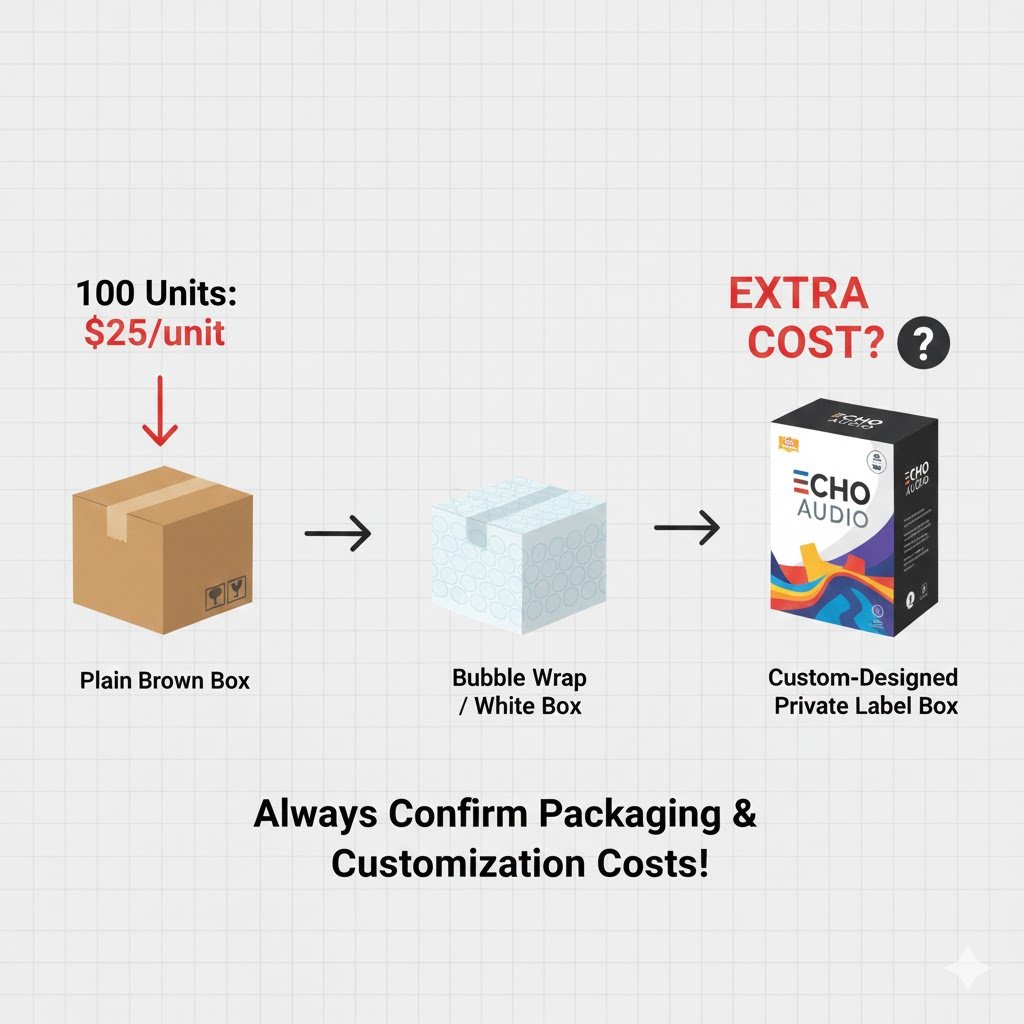
The packaging used in a supplier’s sample or product listing may not be the standard default option, and customization is rarely free.
- Actionable Tip:
- Confirm the packaging included in the quoted price (e.g., Is it a plain white box, bubble wrap, or a custom-designed box?).
- If you require a private label, logo printing, or specific graphic design, explicitly ask for the separate cost for these customizations before placing the order. Never assume customization is complimentary.
3. Confirm If the Price is for Inventory or New Production
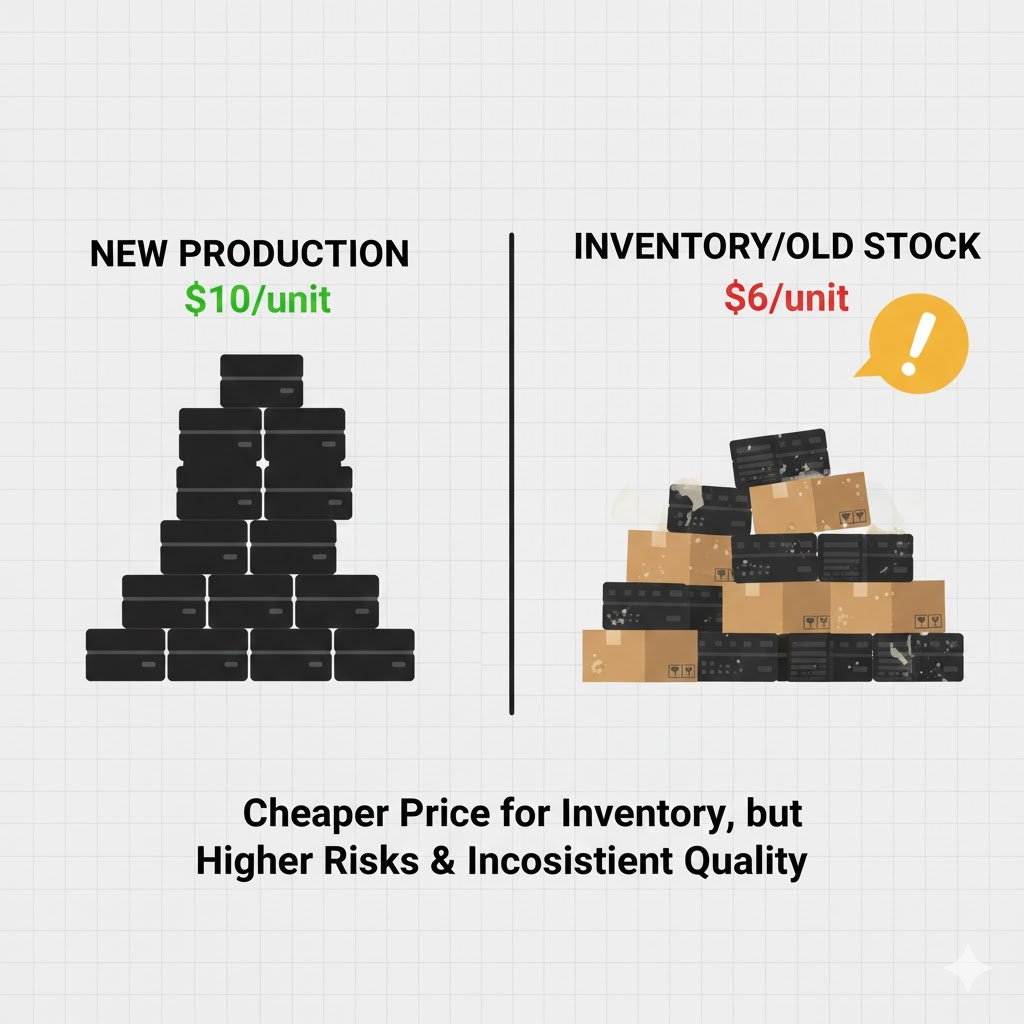
A low price can sometimes indicate that the supplier is clearing out old stock (inventory). While this offers a bargain, it carries risks.3
- Inventory Risks: Overstock items may be older, stored poorly, and susceptible to defects (dust, rust, quality issues).
- Consistency Risk: Inventory prices are often one-time deals. When you reorder, the new production price will likely be 20-30% higher, making future pricing inconsistent.
- Actionable Tip: When a price seems exceptionally low compared to other quotes, ask the supplier directly whether the quoted price is for existing inventory or for new production. For long-term business and consistent quality, it is usually better to opt for newly produced goods.
To Wrap Up
Successfully importing requires clarity and attention to detail. By specifying your desired Incoterm and proactively checking on quantity breakdowns, packaging costs, and production status, you can secure precise quotes and avoid unexpected costs.