Before you commit to importing any product from China, deep research is crucial. This step helps you determine if a product is profitable, easy to ship, and if you have the necessary qualifications to legally import and sell it. Failing to research can lead to high unexpected costs, legal issues, and ultimately, significant financial loss.
Here is a practical, step-by-step approach to conducting thorough product research.
1. Choosing Profitable Products: Principles and Discovery
Instead of importing based on personal preference, use a strategic approach to select products with high market potential.
Four Principles for Product Selection
- Customer Value & Need: Choose products that genuinely solve a customer problem or meet a specific need. Always seek feedback from your target demographic (e.g., if selling cosmetic boxes, get advice from women).
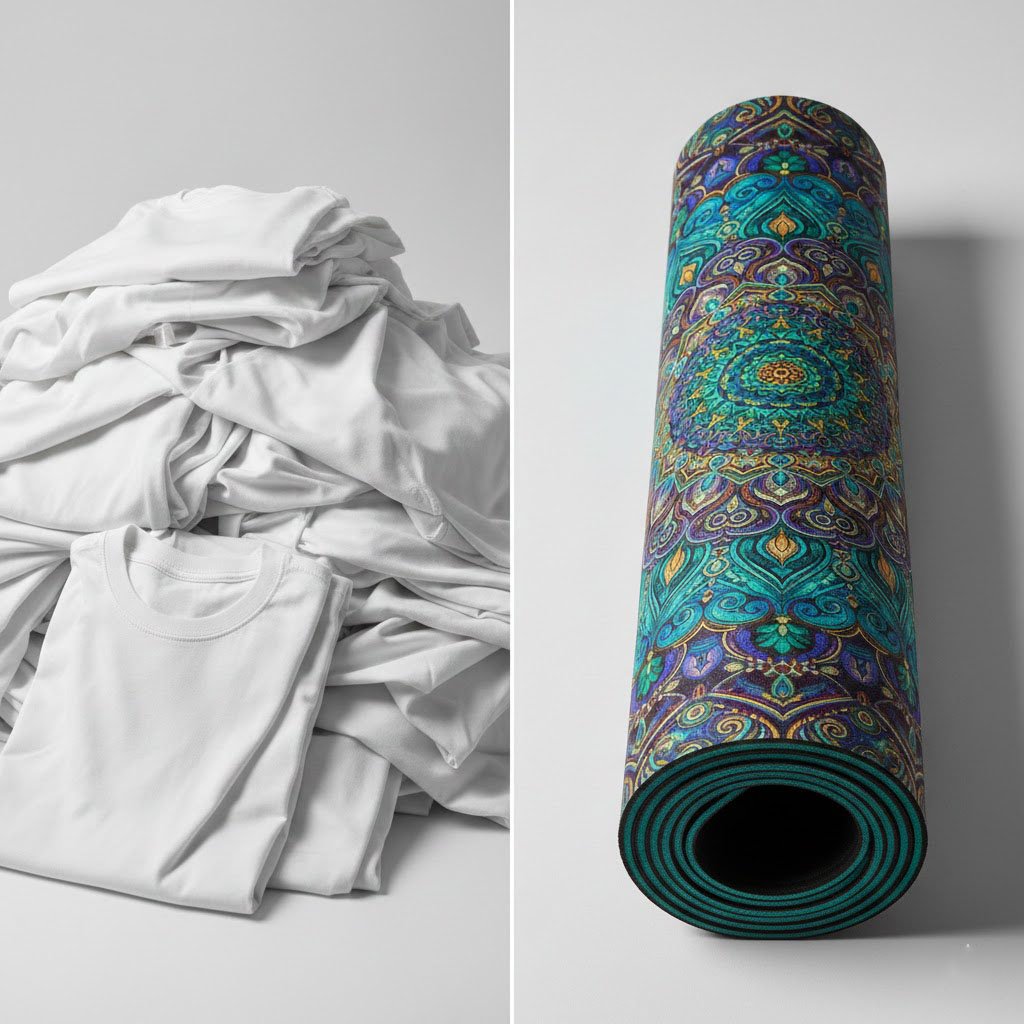
- Market Scarcity: Avoid common, everyday items (like basic T-shirts or towels) that are easily found and dominated by large local retailers. Focus on products that are not very easy for customers to acquire locally.
- Potential for Improvement: Select products you can modify or enhance to make them unique. By integrating your own design (e.g., unique patterns on a yoga mat or makeup bag), you differentiate yourself and justify a higher price than competitors.
- Proof of Demand (Bulk Sales): For new businesses, it’s safer to start with products that are already selling in bulk in the market. While this may mean smaller initial profit margins, it drastically reduces trade risk and allows you to gain invaluable import and market experience before investing in a brand-new concept.
Where to Discover Product Opportunities
- E-commerce Tools: Tools like Jungle Scout (often used by Amazon sellers) can reveal product opportunities and market demand in various countries. Even if you don’t sell on Amazon, it’s a valuable research tool.
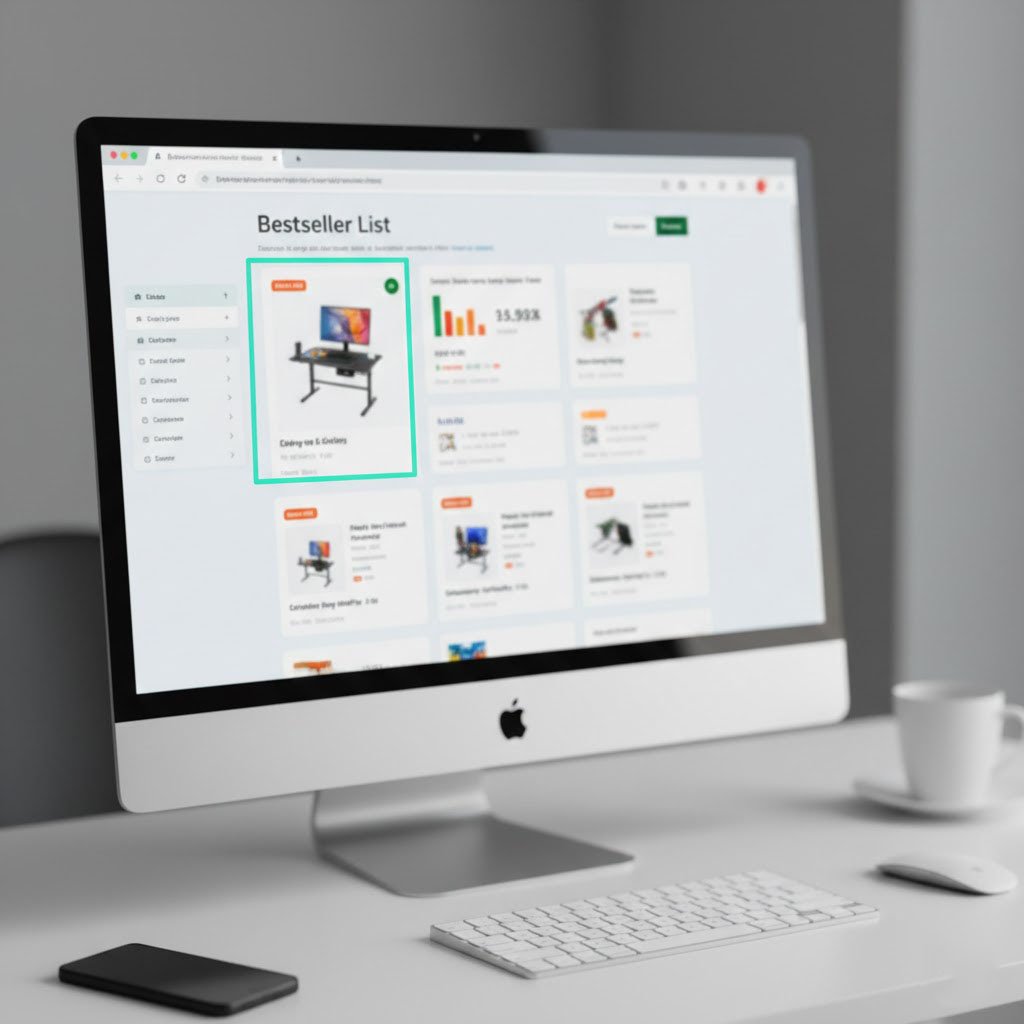
- Bestseller Lists: Check Amazon’s Bestseller List and New Releases List via Google search.
- Dropshipping Tools: Search for “dropshipping product search tools” on Google. These often highlight trending products by showing social media ads (e.g., on Facebook) with high engagement (50,000+ to 100,000+ video views).
Tip: Ensure your product selection strategy aligns with your specific business model (e.g., e-commerce vs. offline store).
2. Product Price Research: Wholesale vs. Retail
Once you have a list of potential products, research the wholesale price to estimate profit potential.
- Alibaba Search: The most direct method is searching on Alibaba.
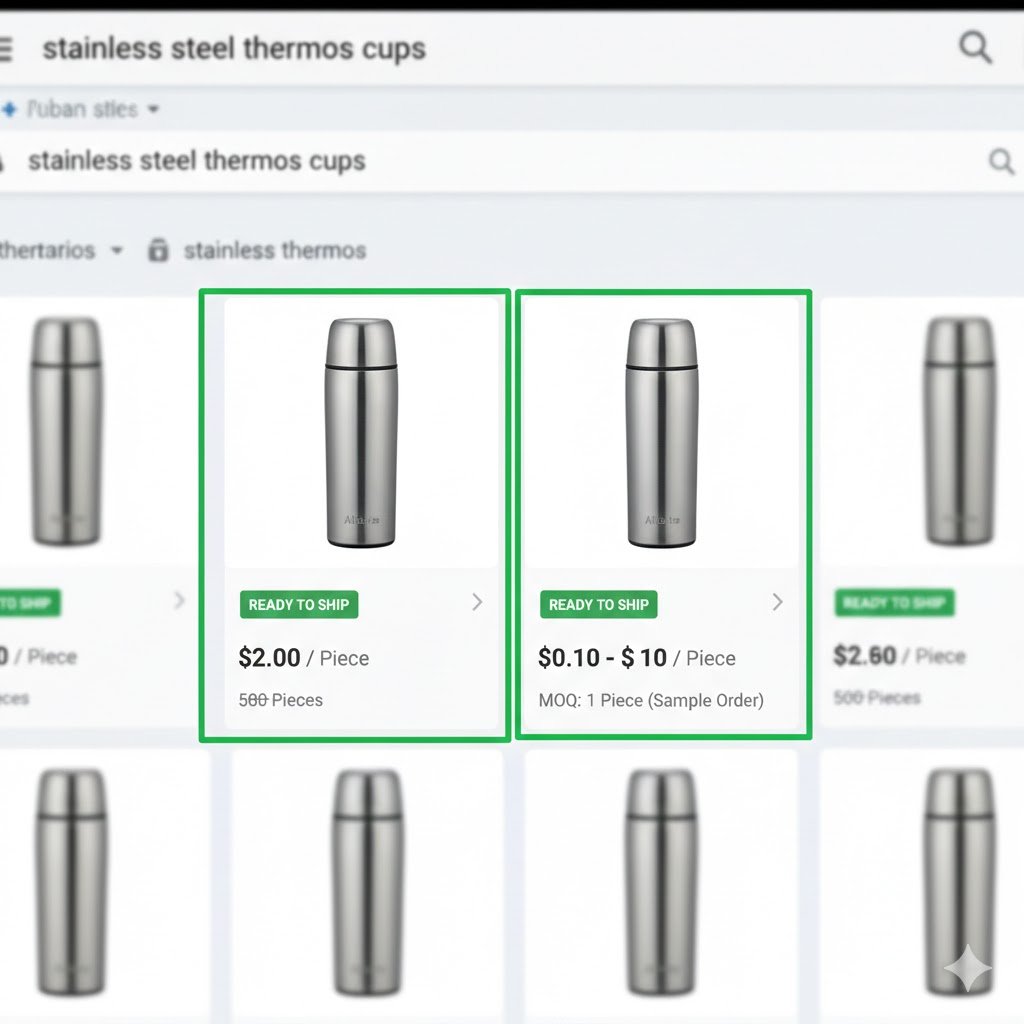
- “Ready-to-Ship” Items: These display a set price and are a good initial standard for analysis. If ordering in bulk (thousands of USD), expect the final price to be 10% to 20% lower than the listed small-quantity price.
- Low Prices without Ready-to-Ship: Ignore incredibly low prices on products without a “ready-to-ship” option, as these are often just placeholders used to attract inquiries.
- Wholesale-to-Retail Ratio: A common benchmark is that the retail price in developed countries is often 6–7 times the wholesale price in Chinese factories.
- Example: A $2 wholesale thermos cup may retail for $12.
- Caveats: This ratio is lower for high-value items (e.g., a $100 wholesale product might retail for $200-$300) and often much higher for very low-value items (e.g., a $0.3 wholesale USB cable might retail for $3 or more).
3. Shipping Solution and Cost Research
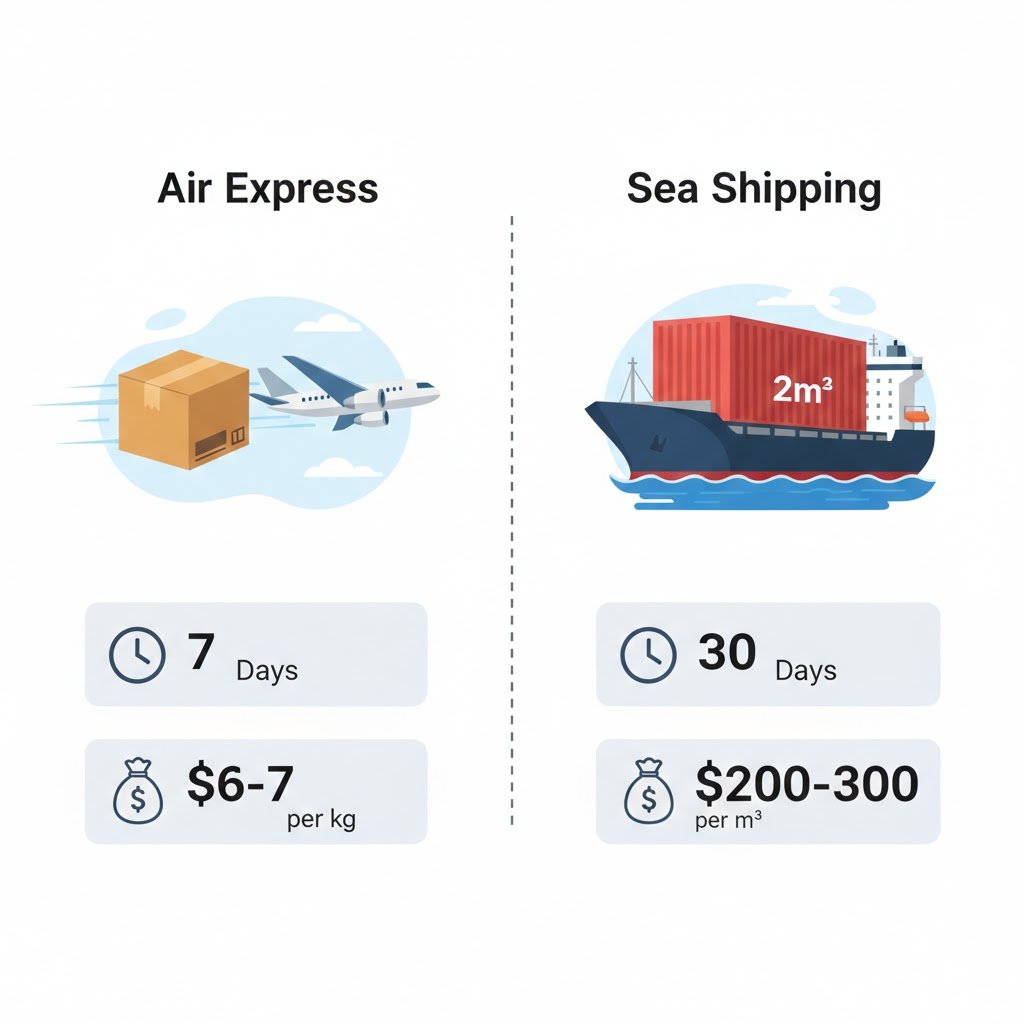
Shipping can significantly inflate the final cost, especially for low-value or high-volume items.
| Shipping Method | Ideal for | Time (China to US) | Cost Considerations |
| International Express (FedEx, DHL) | Smaller, higher-value packages (under 20kgs is best) | ~7 days | Calculated by actual weight or dimensional weight (whichever is greater). Avg. $6-$7 per kg for packages over 20kg. |
| Sea Shipping (Freight Forwarder) | Large volume, non-urgent bulk orders | ~30 days | Minimum shipping volume is often 2m³ (Cubic Meters). Total cost (including all import/export fees) averages $200–$300 per 1m³. |
- Avoid: Shipping low-value, high-volume products (like disposable paper cups) by Express, as the dimensional weight can make the shipping cost per unit outweigh the product cost.
- Restrictions: Products containing lithium batteries, liquids, or powders are often prohibited from international express shipping and may require specialized (and potentially restrictive) sea freight. For small businesses, the 2m³ minimum for sea freight for items like hand sanitizers can be too high.
4. Importing and Selling Qualification Research
Researching compliance requirements is essential to avoid delays, seizure, or being banned from sales platforms.
Qualifications for Import
- Compliance Certificates: Determine if your product requires specific certificates (e.g., CE EN71 for toys, or compliance for electronics/medical products).
- Regulatory Registration: For products like food, medicine, or health items, you (the importer) and your Chinese supplier may need to register with local bodies like the FDA in the US.
- Research Method: The most convenient way is to consult with a freight forwarder or ask your potential suppliers directly.
Qualifications for Selling (Marketplace)
- Platform Certificates: If selling on platforms like Amazon, consult their guidelines. You may need specific certificates to be allowed to sell certain product categories.
- Patent Issues: This is critical. You must research if other sellers hold a patent on the product you plan to sell on Amazon. Selling a patented product can lead to forced removal and the loss of your inventory and investment.
- Note: Selling on your own website (Shopify) or offline stores usually poses a lower risk of patent issues compared to large marketplaces like Amazon.
5. The All-in-One Cost Breakdown
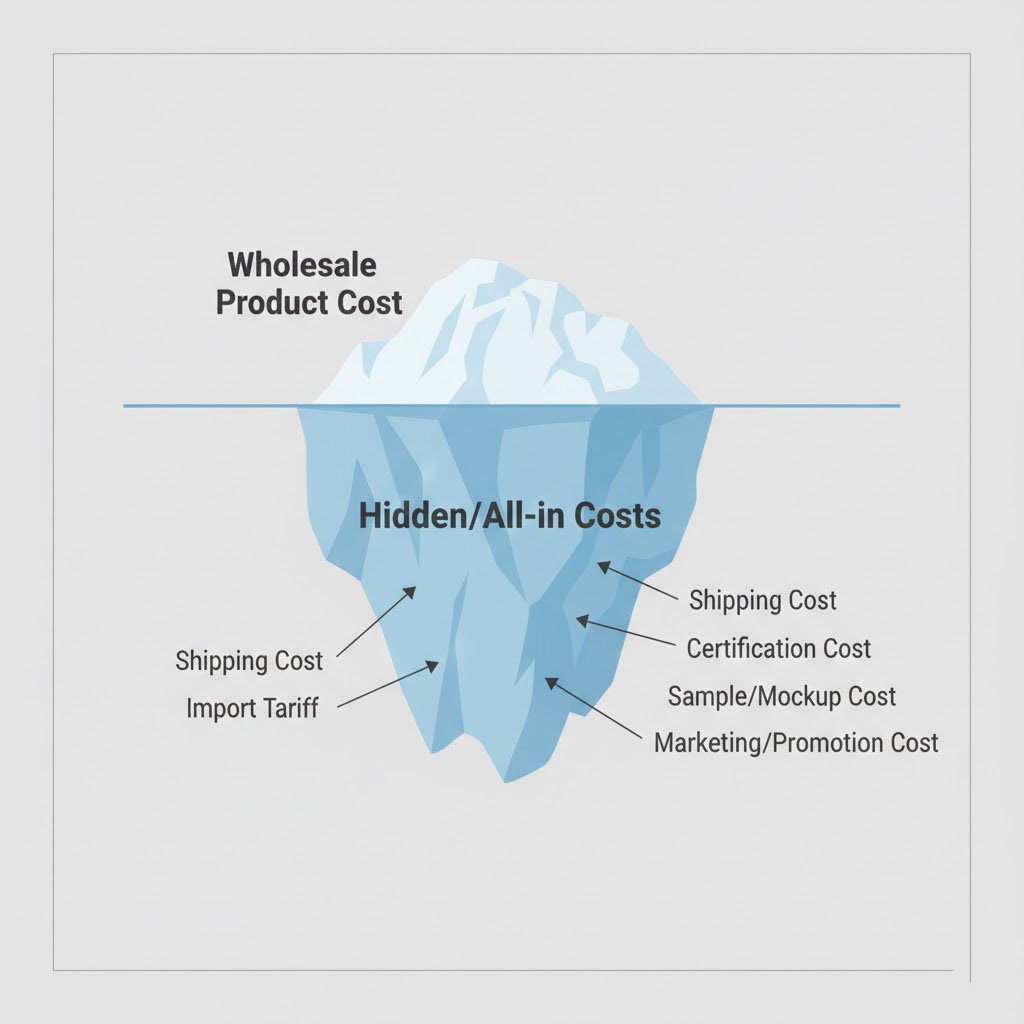
The wholesale price is only a fraction of the total investment. A complete cost breakdown is necessary to accurately calculate your net profit margin.
| Cost Component | Description |
| Sample/Mockup Cost | $50–$100 for a quality test sample. Custom/new product development models can range from $100 to over $100,000. |
| Product Cost | The final negotiated wholesale price paid to the factory. |
| Certification/Qualification Cost | If the supplier doesn’t have required certifications (e.g., FDA registration, CE EN71), the cost to obtain them must be factored in. This can be substantial for a small order (e.g., $\approx$$4,000/year for FDA registration). |
| Shipping Cost | Can be a huge proportion, especially for low-value items shipped by air. |
| Import Tariff | The duty percentage (e.g., 5% to 10% of product value) charged by your country’s customs. Consult your local customs office or a site like cbp.gov (for the USA). |
| Marketplace Cost | Selling fees (e.g., Amazon charges $\approx$15%–20% referral fees), fulfillment fees, and storage fees. |
| Marketing/Promotion Cost | The necessary budget to drive sales. |
Profit Goal: Aim for a 20%–30% net profit margin after accounting for ALL these costs. You can maximize this by selling unique, branded, or patented products.